Israel’s Elections and Their Regional Implications Discussed
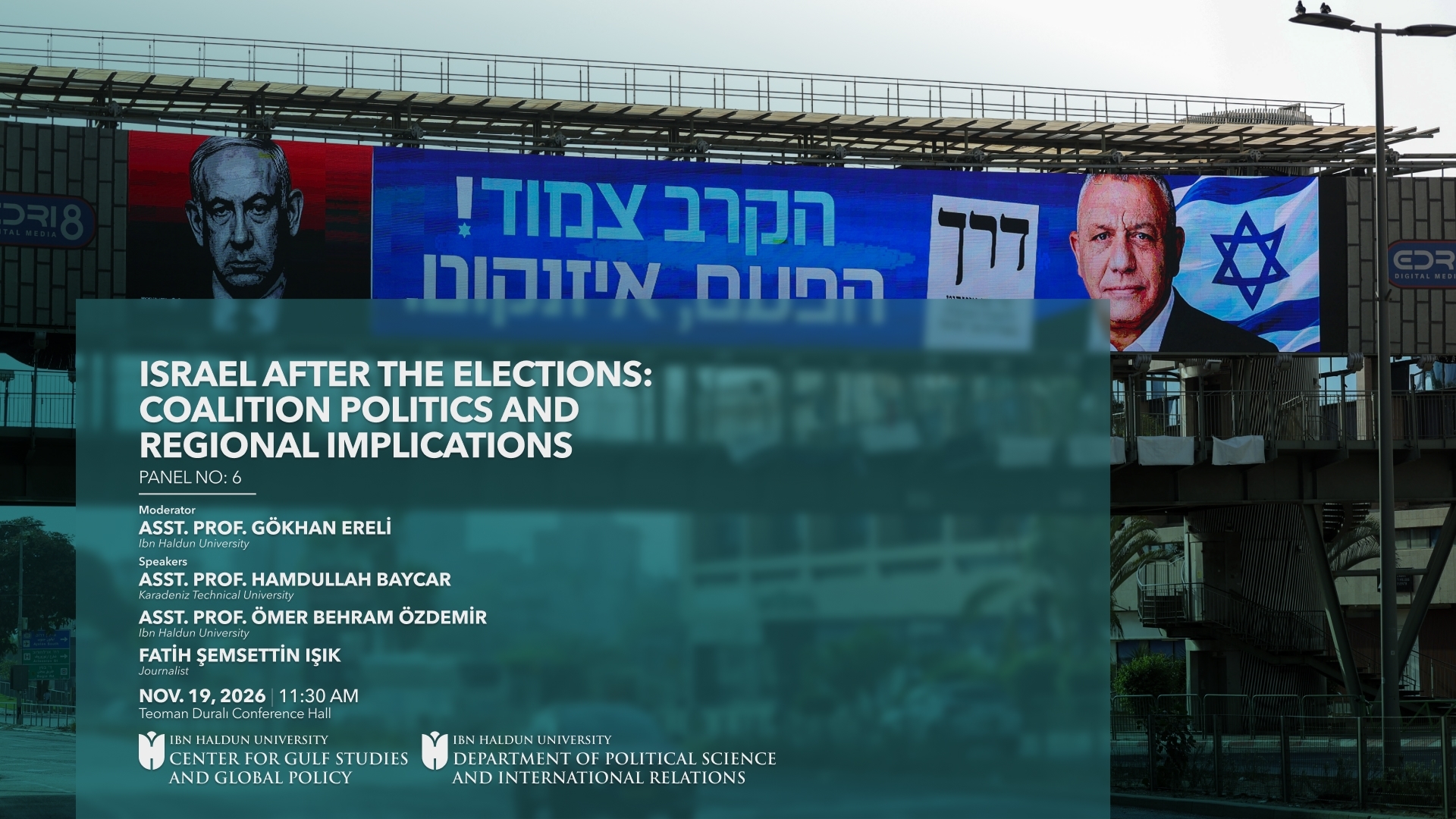
A panel organized by the Center for Gulf Studies and Global Policy and the Department of Political Science and International Relations examined the coalition deadlock following Israel’s 27 October elections and the possible implications of the outcome for Lebanon, Syria, Jordan and the Gulf.
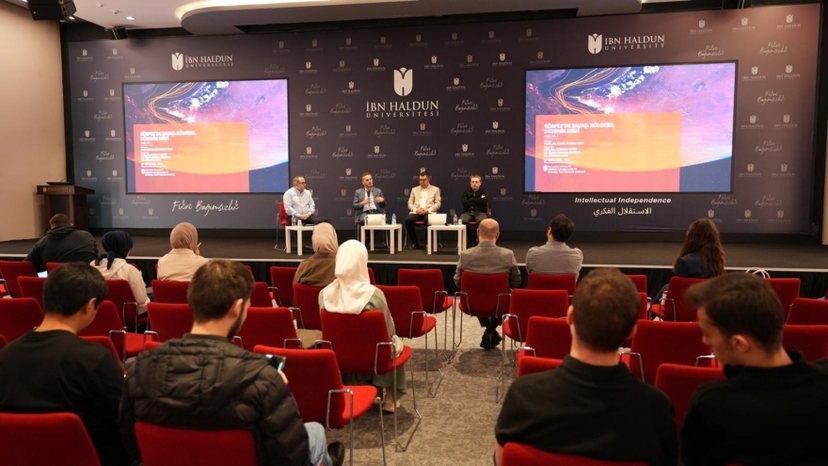
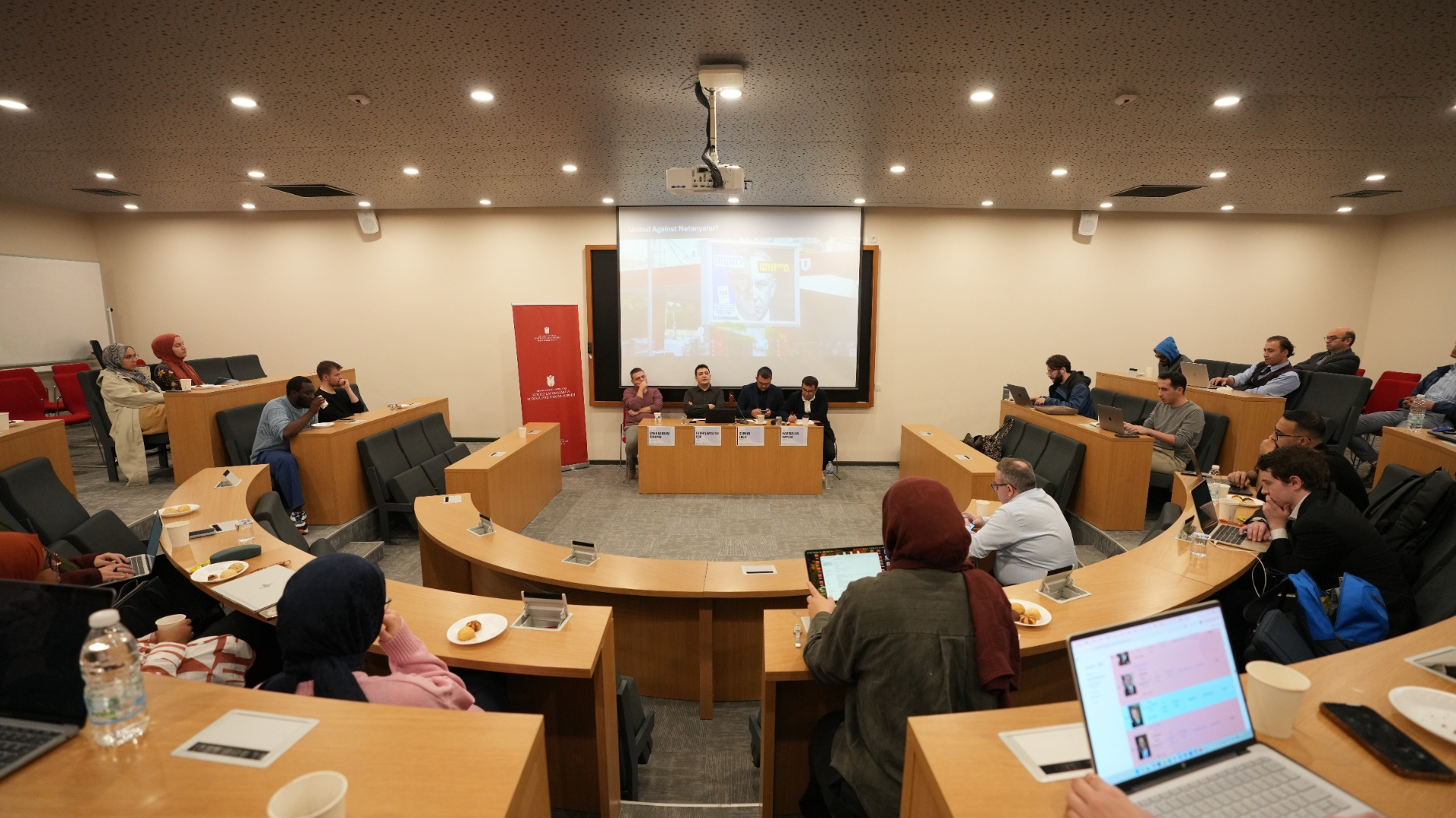
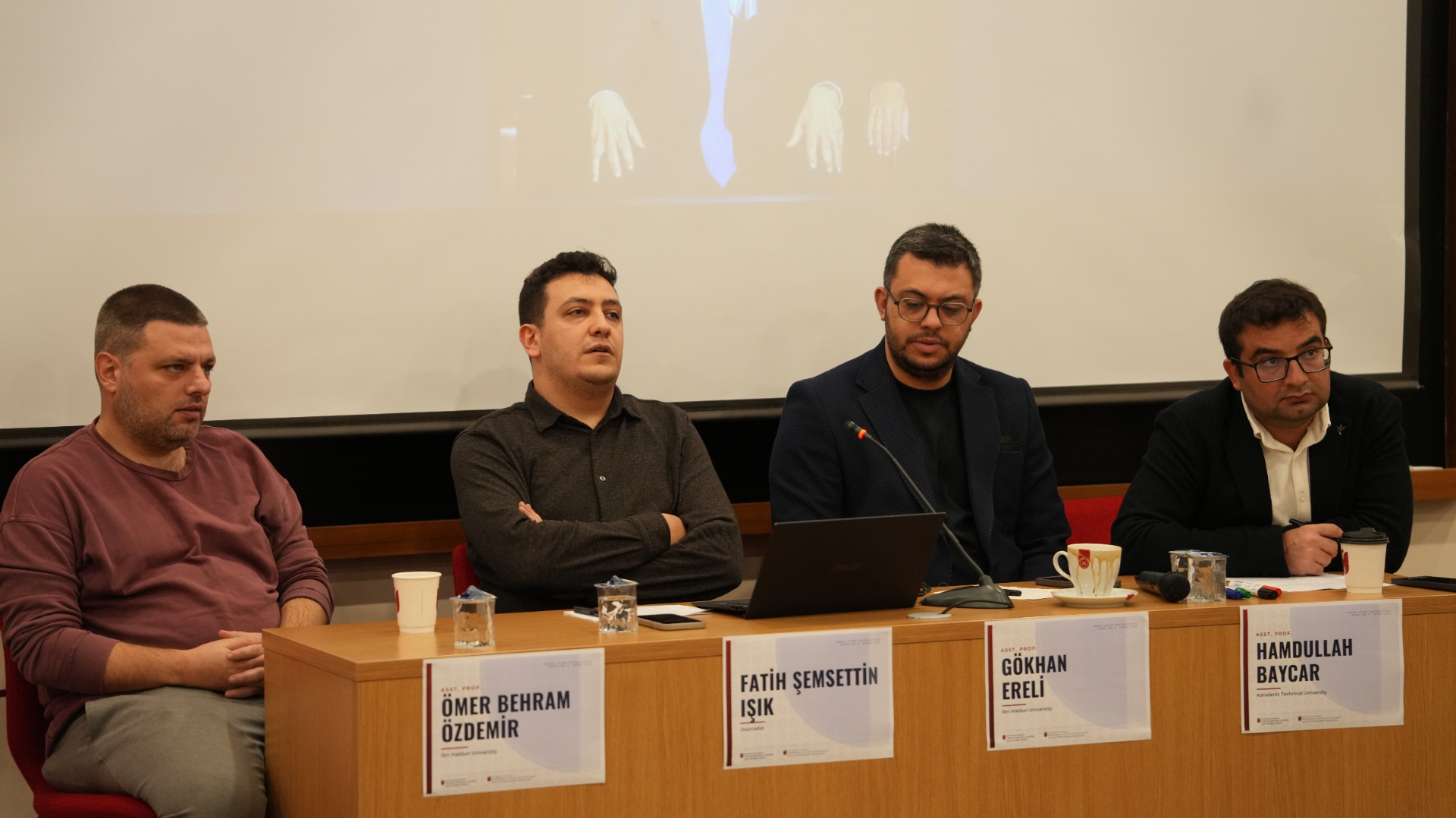
The panel “Israel after the Elections: Coalition Politics and Regional Implications,” co-organized by Ibn Haldun University’s Center for Gulf Studies and Global Policy (GSGP) and the Department of Political Science and International Relations, took place on 19 November 2026 at the Teoman Duralı Conference Hall. The event was the sixth in the Center’s panel series. Asst. Prof. Gökhan Ereli of Ibn Haldun University moderated, and the speakers were Asst. Prof. Hamdullah Baycar of Karadeniz Technical University, Asst. Prof. Ömer Behram Özdemir of Ibn Haldun University, and journalist Fatih Şemsettin Işık.
The panel took place amid deepening political uncertainty following Israel’s 27 October elections. In the 120-seat Knesset, Prime Minister Benjamin Netanyahu’s bloc won 53 seats, the opposition bloc led by Gadi Eisenkot won 48, and Arab parties secured a record 19. Turnout reached 78 percent, the highest since 1999. On 8 November, President Isaac Herzog tasked Eisenkot with forming the next government.
Opening the panel, Fatih Şemsettin Işık noted that, as so often in Israeli politics, neither bloc secured a governing majority, leaving the country in deadlock. He pointed out that the Arab parties now hold a pivotal position between the two blocs. Işık stressed that Netanyahu has suffered a major loss of political power, and that military service for the Haredim lies at the heart of coalition negotiations. In his view, Israeli foreign policy will not change fundamentally whoever forms the government. Any change is more likely to appear on the Lebanese, Syrian and Jordanian fronts than on Iran or Gaza.
Asst. Prof. Ömer Behram Özdemir assessed the new government’s likely approach to Lebanon, Syria and Jordan. He identified the disarmament of Hezbollah and Israel’s military presence in Lebanon as the key unresolved issues. Özdemir argued that an Eisenkot-led government would probably not bring major change, although a “rebranding” of Israel’s Syria strategy could emerge, with diplomacy given greater weight. He expects military activity to remain most intense in Lebanon and at a lower level in Syria, while policy toward Jordan and the West Bank is unlikely to change.
Asst. Prof. Hamdullah Baycar offered a Gulf perspective. He noted that the Gulf states find themselves in the middle of the war, and that their relations with the United States and Israel directly shape their regional policies. He argued that the Israeli and US elections should be read together. Baycar identified two distinct camps in the Gulf. The United Arab Emirates and Bahrain will continue to work with the United States and Israel regardless of who governs in Israel. Saudi Arabia has taken a different path through the Mecca Joint Defense Agreement it signed with Türkiye and Pakistan in August. Baycar added that commentary on the agreement varies depending on whether it is viewed in relation to Iran or to Israel.
The presentations were followed by a Q&A session that addressed the influence of the Israeli lobby in the USA, partnership of UAE-Israel and the future of Türkiye-Israel relations.
Photos
Related Content
Prof. Dr. İsmail Numan Telci Represented Türkiye at the Margalla Dialogue, One of Pakistan’s Prominent Forums
Opinion: Mecca Defence Alliance: The Making of Order or the Preparation for Disorder?
Gulf Horizons: Lebanon within the Gulf Migration System: Peripheral Incorporation and the Limits of Labor Migration Governance Alignment
Congress: Our Center (GSGP) Participated in the 8th Middle East Congress on Politics and Society
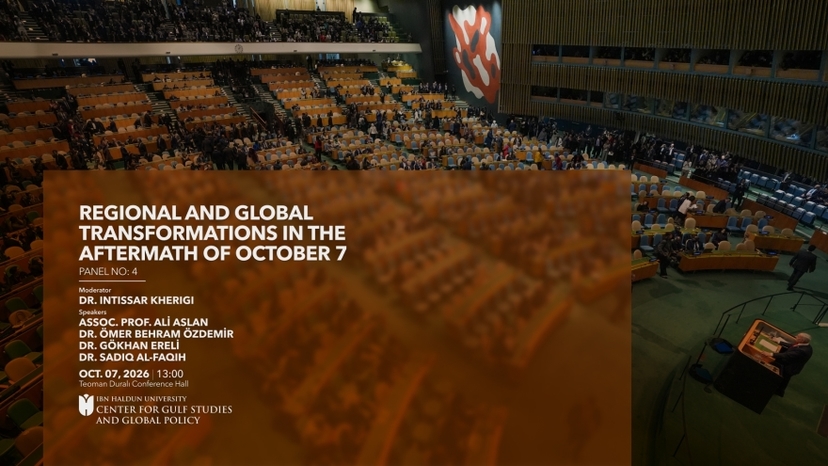
Panel: Regional and Global Transformations in the Aftermath of October 7
GSGP's Summer 2026 Publications