Opinion: From Levy to Missile: How Do the Houthis Build Their Arsenal?

Opinion: From Levy to Missile: How Do the Houthis Build Their Arsenal?
From Levy to Missile: How Do the Houthis Build Their Arsenal?[1]
Faozi Algoidi - Visiting Fellow and Researcher, Middle East Council on Global Affairs, Doha
In January 2026 the United States Treasury estimated Houthi earnings from illicit oil sales at over two billion US dollars a year.[2] In the same Western estimates, direct Iranian support to them does not exceed 300 million dollars a year.[3] The gap between these two figures is the subject of this paper.
In the prevailing discourse the Houthis are read as an Iranian arm, funded and armed from Tehran. That reading is correct in its origins and incomplete in its present. Over ten years the group has built a self-generating revenue system. It then converted that revenue into an arsenal through a commercial supply chain spanning continents.
By war economy I mean the network of revenues, contracts and privileges that arises inside a conflict and depends on its continuation. This is not incidental corruption. It is a structure with organized beneficiaries and a high exit cost. The question also has a direct Gulf dimension. If most of the funding is self-generated and most of the components are commercial, then pressure on Tehran alone addresses the chain’s smallest link.
This article addresses three questions. How is the money collected? How does it become weaponry? How far has the network extended?
A Levy Economy without Production
Collections in Houthi-controlled areas in 2023 are estimated at some 2.2 trillion Yemeni rials, roughly 2.5 billion dollars.[4] Published estimates vary widely, because the group publishes no auditable budget. They should therefore be read as an indication of structure, not a closing account.
Revenues are distributed across a few instruments. Taxes and customs account for some 700 billion rials a year, or roughly 1.3 billion dollars. The Zakat Authority accounts for more than 400 billion rials, or some 750 million dollars. Telecommunications add a further yield, which the United Nations Panel of Experts on Yemen estimates at around 150 billion rials a year.[5]
The most important and least visible instrument, however, is control of the port. Around 70% of Yemen’s imports pass through Hodeidah, Salif and Ras Isa, according to the United Nations Mission to Support the Hodeidah Agreement (UNMHA). Their share of bulk commodity imports rose from 50.5% in 2022 to 74.6% in 2023, according to World Bank data.[6]
Fuel customs alone between 2022 and 2024 are estimated at some four billion dollars. The figure reaches 5.5 billion once informal fees and intermediaries’ margins are added.[7] An indirect gain is added. Restrictions on goods from government-held areas divert part of the import flow to Hodeidah. This diversion alone is estimated to yield around 50 billion rials a month.[8]
The structural significance matters more than the amount. Revenue here does not require a productive economy, only control of transit points. It has therefore held together while domestic output collapsed. This indicates that external economic pressure does not strike the source of funding fatally.
From Levy to Monopoly
Levying alone, however, does not explain the model’s durability, because it produces resentment. What is taking place is a shift from levy to monopoly. That is, from extracting money to redistributing it among beneficiaries who become the guarantor of the system’s survival.
This mechanism appears in three measures. Some 68,000 new commercial registrations were recorded between 2014 and 2025, 26% of them in general trade and importing.[9] Confiscation is used as a financial instrument, not solely a punitive one. In May 2026 land confiscated from Tadhamon Bank was auctioned at an estimated 9.4 billion rials, around 17.6 million dollars.[10] Licences for 4,225 commercial agencies were also revoked that April. Exclusive agencies were then redistributed to new actors affiliated with the Houthi group.[11] The model carries a cost borne directly by the citizen. Transport costs between governorates have risen by 20% to 30% because of levies at checkpoints. Prices of basic goods have risen by 10% to 20%.[12]
From Money to Arsenal
The armament model has changed in a way that deserves attention. The group no longer relies principally on importing finished systems. It has moved to importing components and assembling them locally.
The link between the two halves of this paper is operational. Dual-use parts are bought on the open market at commercial prices. They require hard currency, an importing company, a shipping agent and an insurance policy. These instruments are already available within the port system described above. In my assessment this explains the shift from external supply to purchase. The group did not build a new armament channel. It used the import channel it already controls.
The seizure of heat-resistant resins, digital lathes and engines suitable for drones at the port of Aden has been documented. The report drew on intercepted shipments and customs documents. The report quoted a port official: the parts were deliberately split across four containers to avoid detection. Together, he said, they constituted the components of an almost complete missile.[13]
The shift is supported by documentation from Conflict Armament Research (CAR). CAR examined more than 800 missile and drone components between August 2024 and June 2025. The parts carried the marks of companies from 16 countries and territories, and the Iranian-made share did not exceed 5%.[14] In October 2026 CAR pointed to an attempt to manufacture part of a medium-range missile using components from a Chinese supplier.[15]
Field evidence confirms the same trend. Traces of hand welding were documented in the debris of a missile that fell on Riyadh. That is the signature of local assembly, not a finished import. The regulatory gap appears here. The Wassenaar Arrangement, the voluntary framework through which 42 states coordinate export controls on conventional arms and dual-use goods, does not include China. Its lists also control items above defined performance thresholds, so many commercial parts remain outside that control.[16]
The African Extension
In recent years the network has extended to the African shore of the corridor. A smuggling cell established by the group in Djibouti around 2022 has recently been documented. The cell operates through front companies that receive goods, which are dismantled and moved by dhow. The report pointed to a vessel seized in June 2025 carrying some 750 tonnes of material. Its captain said it had made 12 voyages to the port of Salif.[17] The Djiboutian government denies any complicity and says it is investigating these networks.
In Somalia there is a relationship of another kind, which the UN Panel of Experts describes as transactional. An estimated 100 to several hundred al-Shabaab fighters have trained in Yemen. One group spent three months in Saada studying drone assembly. The consideration is financial: a US intelligence estimate puts the movement’s revenues at 100 million dollars a year or more.[18]
The same report states there is as yet no published evidence of advanced weaponry or manufacturing knowledge passing to these networks. This indicates that we are facing a window for intervention.
This reading leads to an important conclusion. We are facing a self-generating funding system and a commercial supply chain, not an arm managed entirely from abroad. Its significance is compounded by the asymmetry of cost. The economic impact of the Red Sea campaign has been estimated at more than 200 billion dollars on a conservative basis.[19] Three practical implications follow.
First, shifting the focus of sanctions from the end user to the supply chain: shipping records, insurance companies and suppliers of dual-use parts. Intercepting a shipment halts a single system; export control halts a capability.
Second, bringing China into the discussion rather than only talking about it. It stands outside the Wassenaar Arrangement and has a direct interest in secure passage through the Red Sea. In September 2026 Riyadh asked Beijing for help in curbing the attacks.[20]
Third, addressing the monitoring vacuum at the ports. UNMHA’s mandate ended on 31 March 2026, and fighting escalated that September.[21] The available alternative is customs and banking audit and the tracking of shipping records, not field monitoring alone.
It may be objected that military pressure has proved effective in reducing the attacks. The objection is partly correct, but it measures effect rather than capability. Capability is measured by the speed of reconstitution after a strike. That speed is determined by the supply chain.
I close with an observation I consider fundamental. As long as revenue is independent of production and components remain on the open market, the current deterrence equation addresses symptoms, not causes. The battle that is decided is not in the skies of interception, but in the shipping ledger and the export license.
Keywords: Yemen; the Houthis; war economy; arms smuggling; supply chain; the Red Sea
Notes
[1] This paper is based on open sources.
[2] “Inside the Houthis’ Expanding War Economy in Yemen,” Al Jazeera, 14 September 2026, https://www.aljazeera.com/economy/2026/9/14/inside-the-houthis-expanding-war-economy-in-yemen, accessed 29 October 2026.
[3] Rana Freifer, “How the Houthis Built a Parallel Economy in Yemen,” Al Majalla, 7 August 2026, https://en.majalla.com/node/332404, accessed 29 October 2026.
[4] Mahmoud Aqlan, “The Parallel Economy,” Mokha Center for Strategic Studies, July 2026, cited in “How Have the Houthis Re-engineered the Economy?” Al Jazeera Net, 21 July 2026, https://aljazeera.net/politics/2026/7/21, accessed 29 October 2026.
[5] Aqlan, “The Parallel Economy”; the telecommunications estimate is attributed to the United Nations Panel of Experts on Yemen (2025), cited in Ali Mohammed al-Hazmi, “Yemen between the State Economy and the Militia Economy,” Elaph, 22 October 2026, https://elaph.com/Web/NewsPapers/2026/10/1608757.html, accessed 29 October 2026.
[6] Jamal Mujahid, “Why Do the Houthis Cling to the Port of Hodeidah?” Al Majalla, last updated 24 September 2026, https://www.majalla.com/node/333194, accessed 29 October 2026, citing the United Nations Mission to Support the Hodeidah Agreement and World Bank data.
[7] Estimate of the United Nations Panel of Experts on Yemen, cited in Mujahid, “Why Do the Houthis Cling to the Port of Hodeidah?”
[8] Estimate of the Sana’a Center for Strategic Studies, cited in al-Hazmi, “Yemen between the State Economy and the Militia Economy.”
[9] Aqlan, “The Parallel Economy.”
[10] “The Economy,” The Yemen Review, Quarterly: April–June 2026, Sana’a Center for Strategic Studies, 31 July 2026, https://sanaacenter.org/the-yemen-review/april-june-2026/28066, accessed 29 October 2026.
[11] “Inside the Houthis’ Expanding War Economy in Yemen,” Al Jazeera, 14 September 2026.
[12] Aqlan, “The Parallel Economy.”
[13] Bloomberg report of 23 September 2026, summarised in Ilya Zalutsky, “Yemeni Houthis Set Up Missile and Drone Production Using Chinese Components,” Militarnyi, 24 September 2026, https://militarnyi.com/en/news/yemeni-houthis-missile-drone-production/, accessed 29 October 2026.
[14] “Powering the Houthis: Analysing Houthi Missile Components,” Conflict Armament Research, 11 May 2026, https://storymaps.arcgis.com/stories/7c9e800562ab479c9382268bc75388eb, accessed 29 October 2026.
[15] Conflict Armament Research, Yemen field dispatch, October 2026, and a Reuters report, both cited in Venus Upadhayaya, “Iran-Backed Houthis Trying to Build Medium-Range Ballistic Missiles With Components From a Chinese Supplier, Investigators Say,” Vision Times, 16 October 2026, https://www.visiontimes.com/2026/10/16/, accessed 29 October 2026.
[16] “The Supply Chains and Gaps in Export Controls That Make It Easier for the Houthis to Build Missiles,” Arab News, 15 October 2026, https://www.arabnews.com/middle-east/the-supply-chains-and-gaps-in-export-controls-that-make-it-easier-for-the-houthis-to-build-missiles-3006495, accessed 29 October 2026. The Wassenaar Arrangement is a voluntary, non-binding framework implemented through the national legislation of participating states; the hand-welding detail is attributed there to the United Nations Panel of Experts on Yemen.
[17] Peter Salisbury, Nadwa Al-Dawsari and Jay Bahadur, “From Spoke to Hub: The Houthis in Africa,” Century International, 24 August 2026, https://tcf.org/content/report/from-spoke-to-hub-the-houthis-in-africa/, accessed 29 October 2026.
[18] Wall Street Journal report, presented in “Weapons and Military Training: The Wall Street Journal Reveals an Alliance between the Houthis and Somalia’s al-Shabaab,” Al Jazeera Net, 1 September 2026, https://www.aljazeera.net/news/2026/9/1, accessed 29 October 2026; and Salisbury, Al-Dawsari and Bahadur, “From Spoke to Hub.”
[19] Century International estimate, February 2026, cited in Mujahid, “Why Do the Houthis Cling to the Port of Hodeidah?”
[20] Reuters report cited in Upadhayaya, “Iran-Backed Houthis Trying to Build Medium-Range Ballistic Missiles.”
[21] Mujahid, “Why Do the Houthis Cling to the Port of Hodeidah?”
Related Content
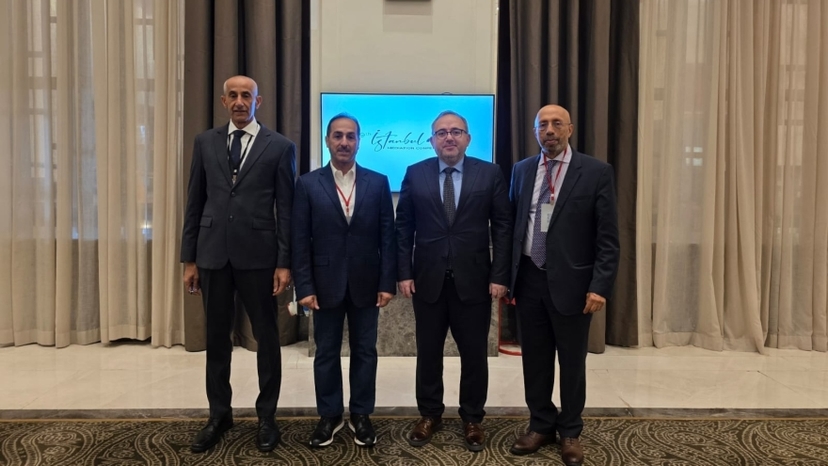
Center for Gulf Studies and Global Policy Attends the “9th Istanbul Mediation Conference”
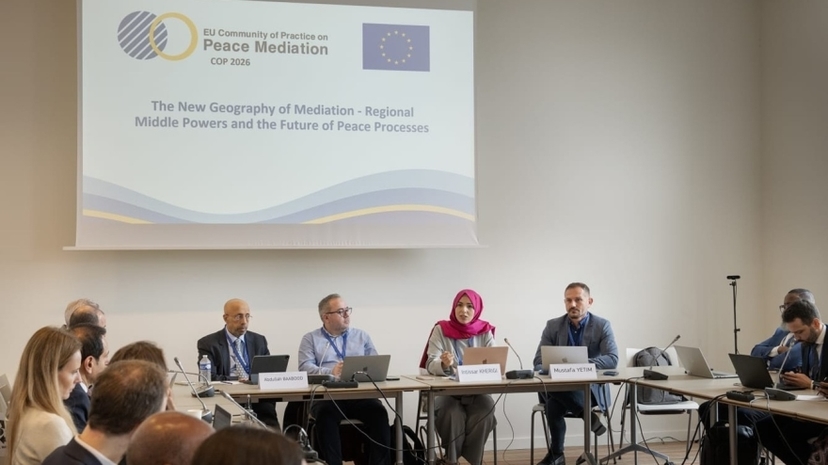
The Center for Gulf Studies and Global Policy (GSGP) participated in the EU Community of Practice on Peace Mediation 2026 in Brussels

Center for Gulf Studies and Global Policy Hosts “Trialogue 2026”
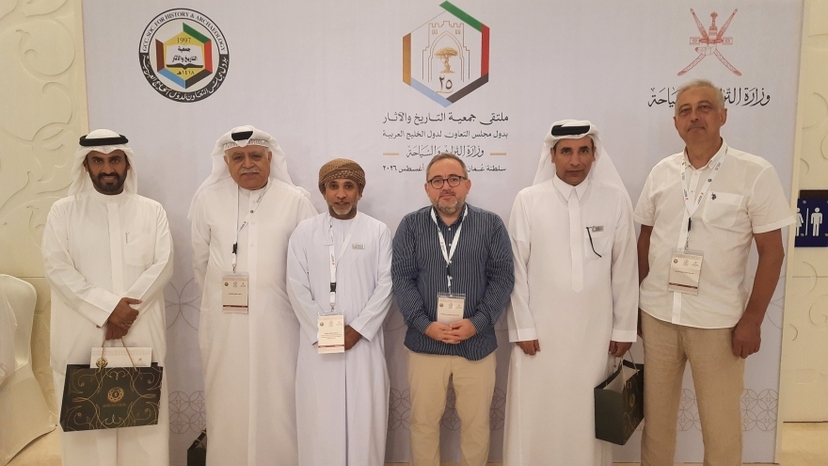
A Representative Team from Our Center for Gulf Studies and Global Policy (GSGP) Participates in the Gulf Historians and Archaeologists Conference Held in Oman
The International Summer School on Gulf Studies the First Event of Its Kind in Türkiye Was Held at Our University
“War in the Gulf and Iran: From Regional Conflict to Global Crisis” Panel Held