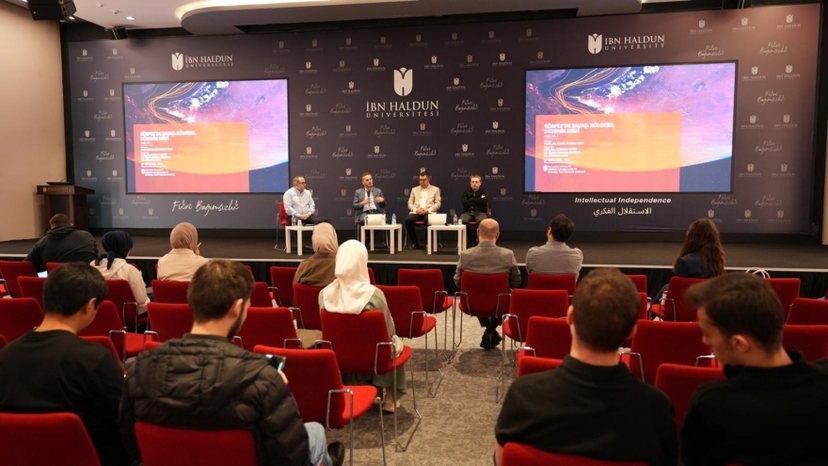
The Forgotten Ecological Cost of War Discussed at Ibn Haldun University
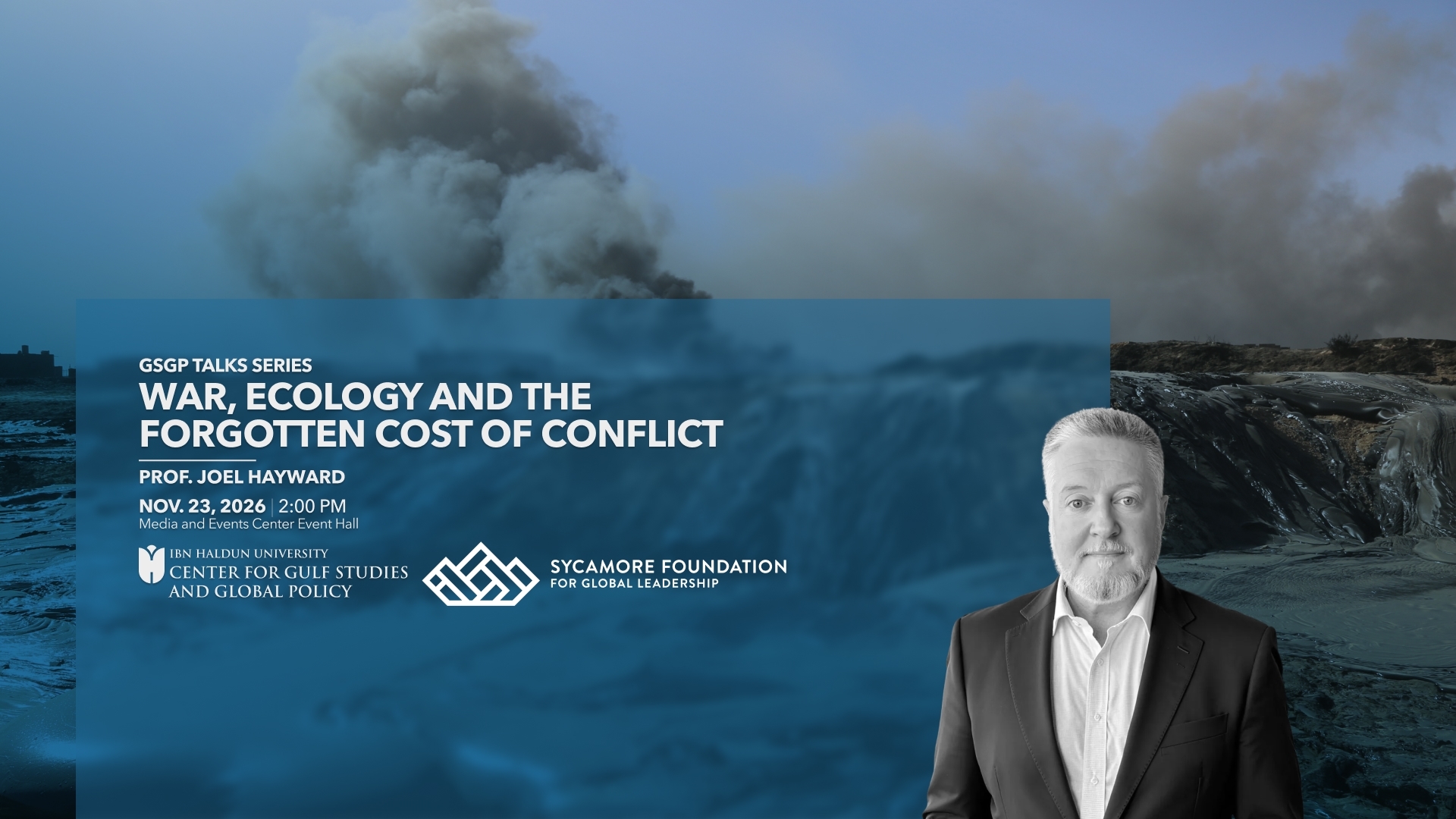
At a GSGP Talk organized by GSGP in collaboration with the Sycamore Foundation for Global Leadership, Prof. Joel Hayward drew on cases from the Second World War to the Russia-Ukraine war to examine the long-term environmental damage of war and the legal gaps surrounding it.
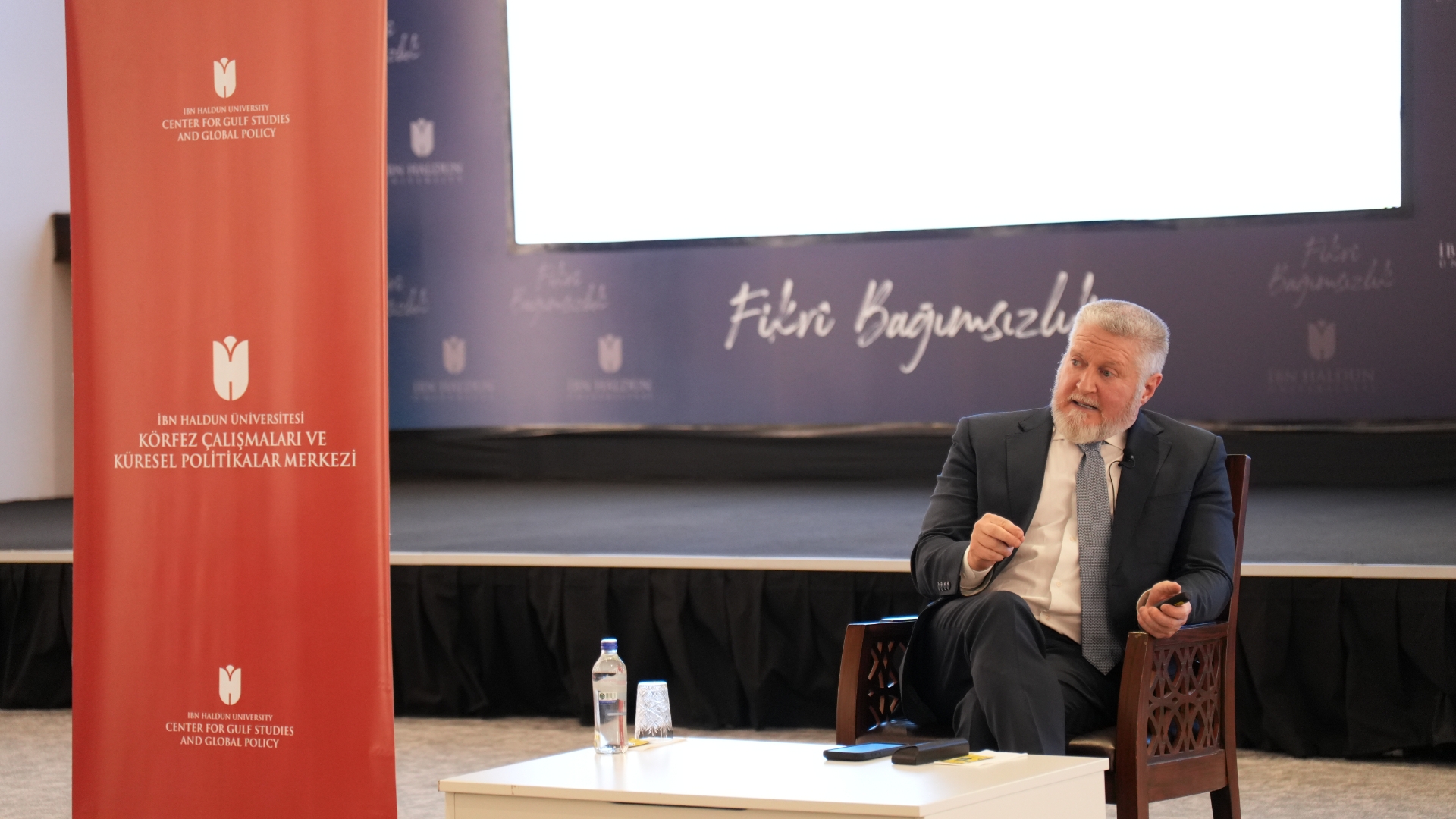
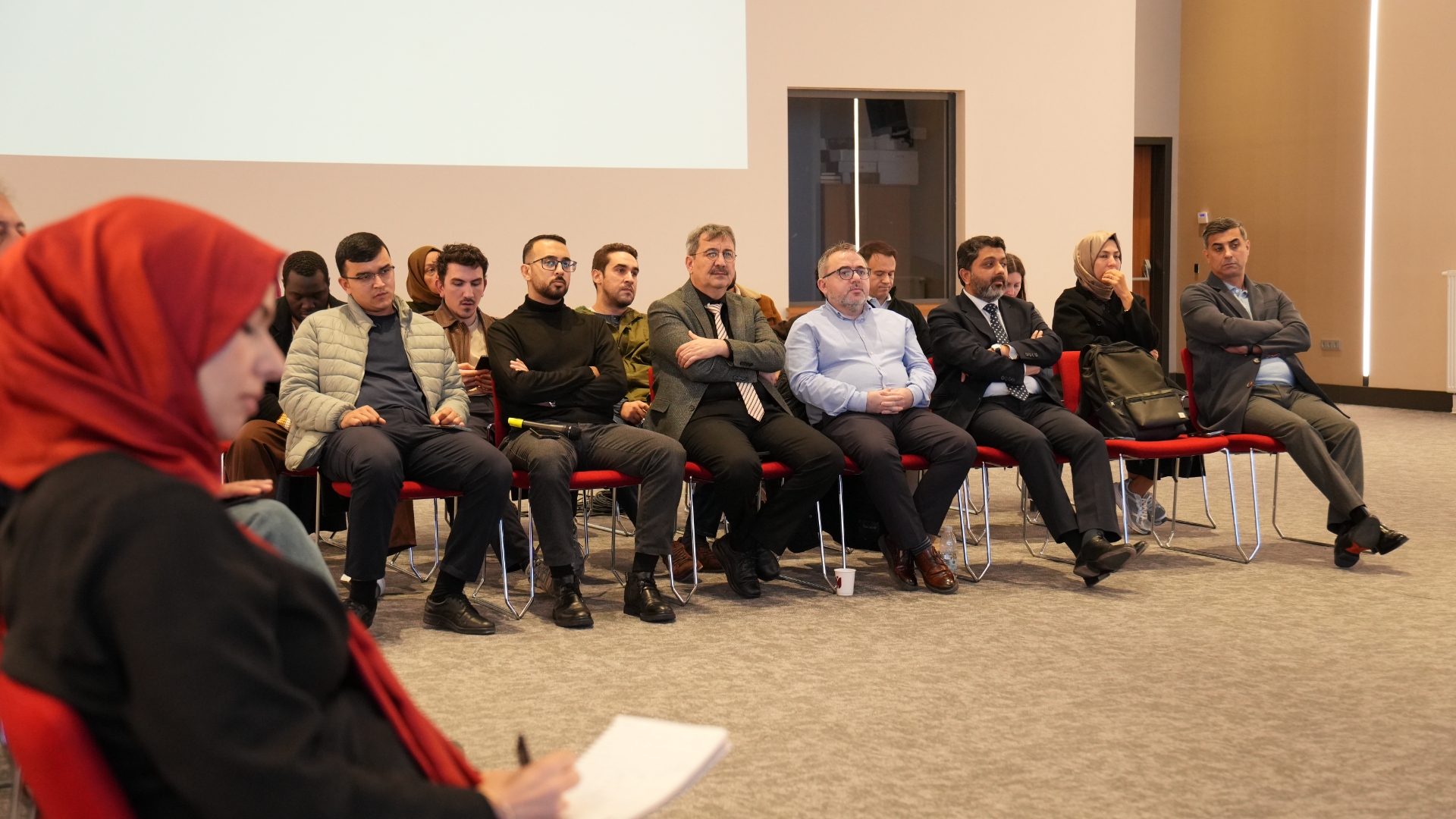
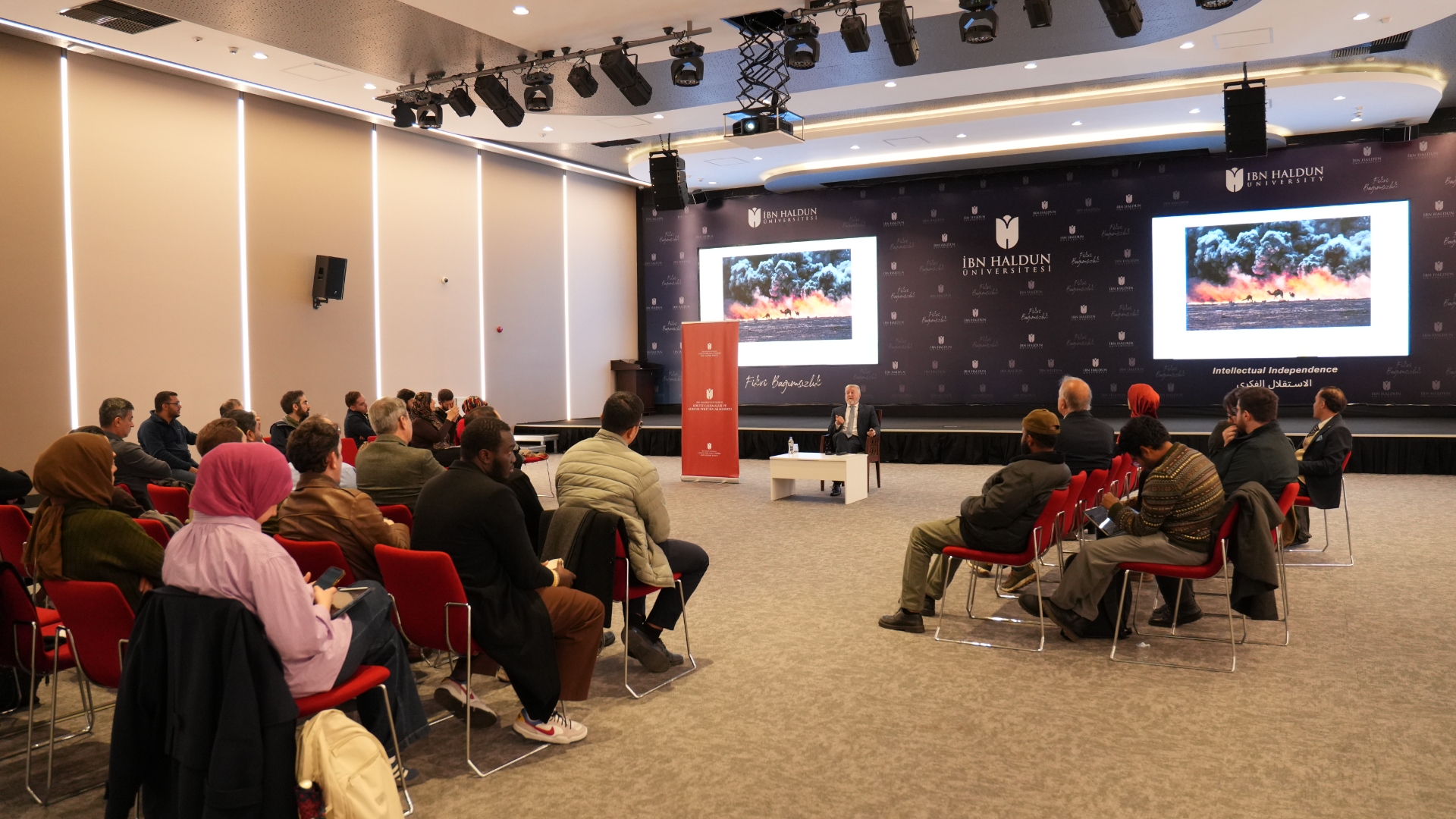
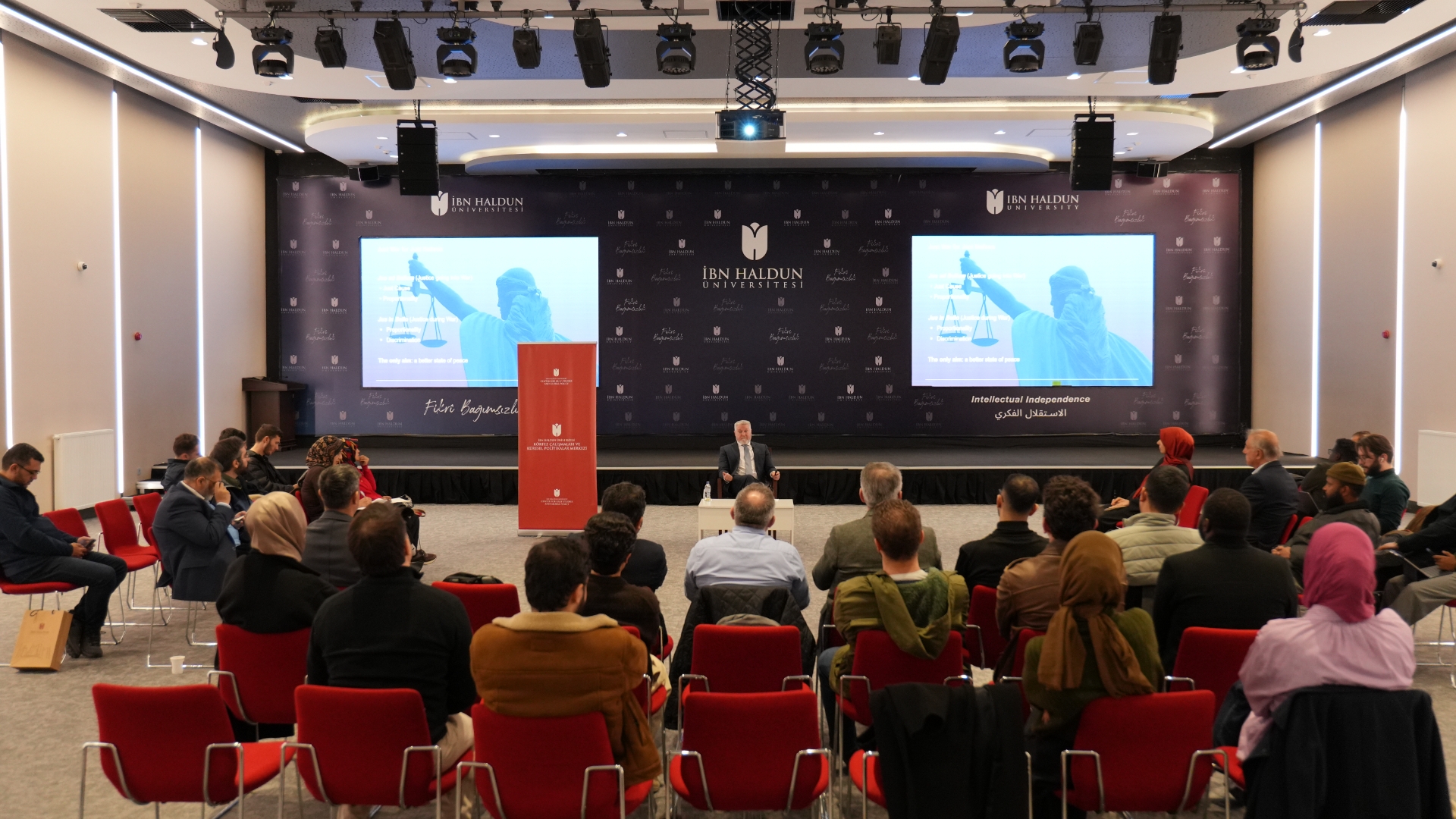
The Center for Gulf Studies and Global Policy (GSGP) at Ibn Haldun University, in collaboration with the Sycamore Foundation for Global Leadership, hosted Prof. Joel Hayward as part of the GSGP Talks series. The event, "War, Ecology and the Forgotten Cost of Conflict," was held on 23 November 2026 at the Media and Events Center Event Hall and moderated by GSGP researcher Asst. Prof. Intissar Kherigi. It addressed the ecological dimension of armed conflict and the environmental ethics of strategic decision-making.
Hayward recalled that the word "strategy" derives from the Greek "strategos" (general). Today, however, strategy is largely shaped by civilian policymakers far removed from the destruction of war. He noted that environmental awareness became a mainstream issue with the 1989 Exxon Valdez oil spill. Yet environmental movements have rarely placed the damage caused by war on their agendas.
Hayward explained that the primary targets of air power are the infrastructures critical to a country's functioning. He added that oil facilities have been among the most important strategic targets since the Second World War, and shared the following cases:
- Second World War: More than 20,000 ships were sunk. By Hayward's estimate, some 9.36 million tons of oil entered the seas.
- Vietnam War: Agent Orange destroyed vast areas of forest and caused birth defects and cancers lasting for generations.
- 1991 Gulf War: Iraqi forces set fire to more than 600 oil wells as they withdrew from Kuwait.
- 1999 Yugoslavia: NATO's bombing of the Pančevo and Novi Sad refineries burned or released over 150,000 tons of oil and oil products. Part of this, along with toxic chemicals, flowed into the Danube.
- 2006 Lebanon: The Israeli strike on the Jiyeh power plant spilled some 15,000 tons of oil into the Mediterranean.
- Russia-Ukraine War: Strikes on Russian refineries are estimated to burn or spill about 30,000 tons of oil a day, close to an Exxon Valdez disaster every day.
Turning to the law, Hayward recalled that the 1977 Additional Protocol I to the 1949 Geneva Conventions prohibits "widespread, long-term and severe" damage to the natural environment. He stressed that requiring all three criteria together creates a significant legal gap. He also noted that the legitimacy of targeting "dual-use" facilities blurs the line between civilian and military targets.
Arguing that the just war principles of proportionality and discrimination should extend to the environment, Hayward said the only legitimate aim of war is "a better state of peace." He warned that excessive ecological destruction outlasts the conflict and breeds hostility for generations.
Finally, Hayward noted that precision technologies now make it possible to disable a refinery without setting it ablaze. He added that ecologists are beginning to join military planning teams in some countries. He argued that change is more likely to come through new conventions on specific issues than through a broad revision of the Geneva Conventions. The event concluded with a question-and-answer session.
Photos
Related Content
Center for Gulf Studies and Global Policy Takes Part in Forum in Iraq
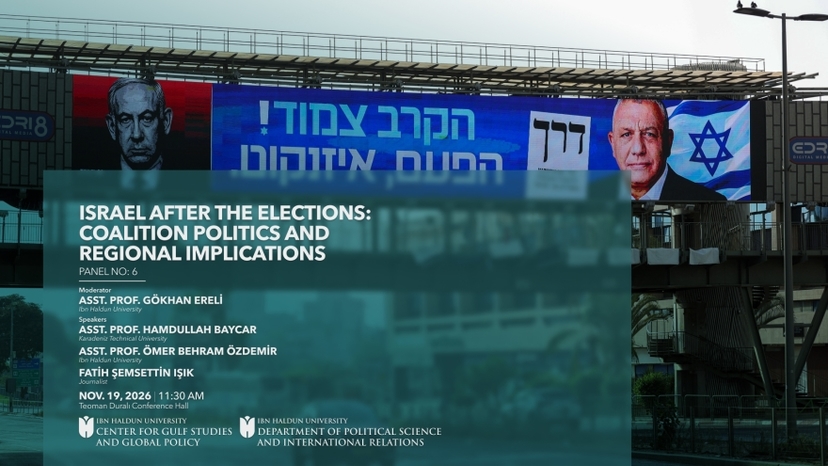
Israel’s Elections and Their Regional Implications Discussed
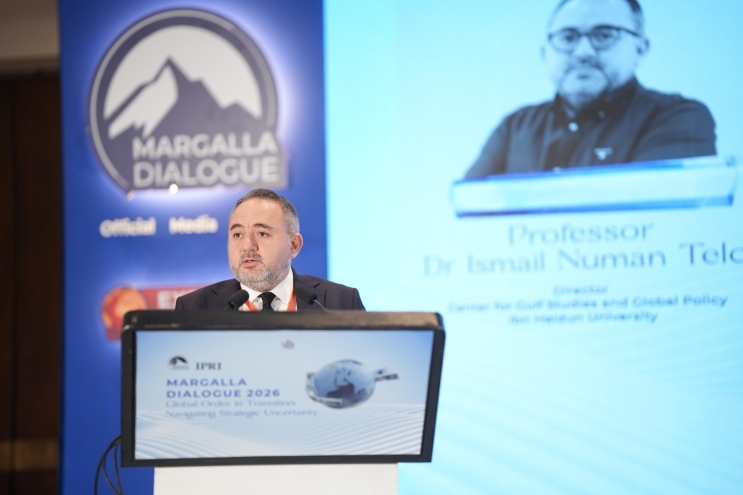
Prof. Dr. İsmail Numan Telci Represented Türkiye at the Margalla Dialogue, One of Pakistan’s Prominent Forums
Opinion: Mecca Defence Alliance: The Making of Order or the Preparation for Disorder?

Gulf Horizons: Lebanon within the Gulf Migration System: Peripheral Incorporation and the Limits of Labor Migration Governance Alignment
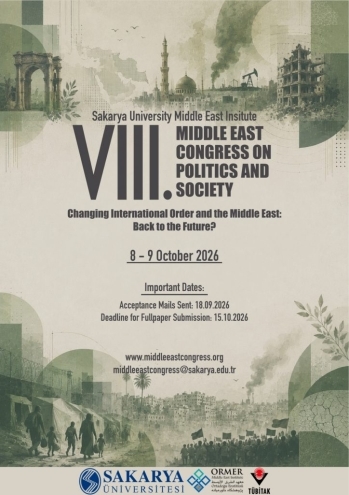
Congress: Our Center (GSGP) Participated in the 8th Middle East Congress on Politics and Society
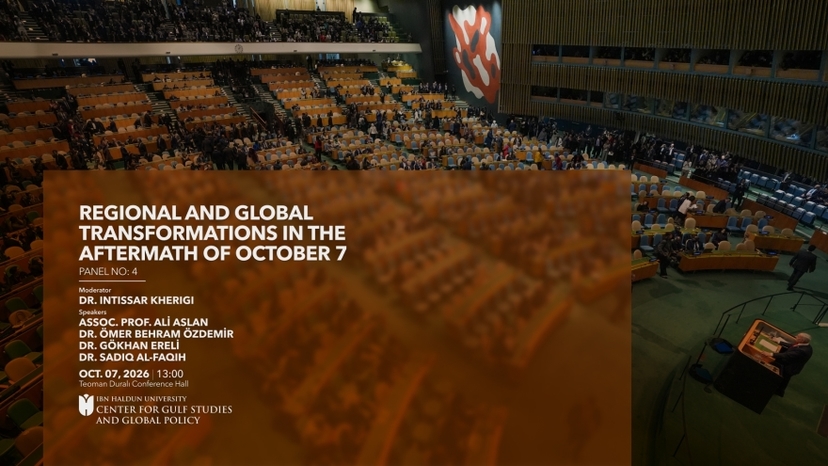
Panel: Regional and Global Transformations in the Aftermath of October 7

GSGP's Summer 2026 Publications